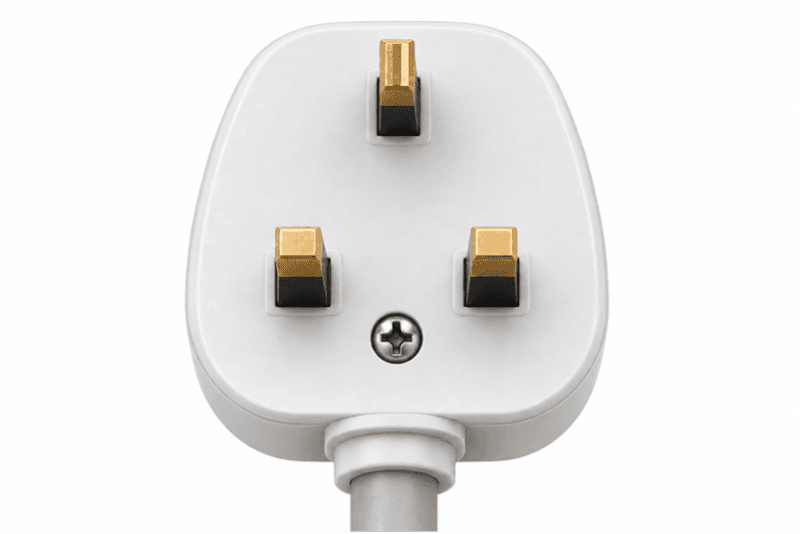
mian header image.png
Advice

How to Rewire a UK Plug: A Step-by-Step Guide

Knowing how to rewire a plug can be useful. It is a relatively simple job, but the connections must be made correctly.

A standard UK three-pin plug contains live, neutral and earth connections, along with a replaceable fuse. Each component has an important safety function.

Important: This guide is intended for general information only and applies to standard UK plugs and appliances in good condition. Electrical work should only be carried out by competent persons who understand the risks involved. If you are unsure at any stage, stop work and seek advice from a qualified electrician. This guide relates only to replacing or rewiring a standard BS 1363 appliance plug and does not cover fixed wiring, sockets, consumer units or any other electrical installation work.

Before You Start

Never work on a plug while it is connected to a socket. Remove it completely from the power supply before opening the casing.

You should also inspect the appliance’s cable before fitting a new plug. Look for cuts, crushed areas, exposed conductors, heat damage or previous repairs.

If the cable itself is damaged, replacing the plug will not solve the underlying problem. The appliance may need professional repair or replacement.

Tools: You will need a small screwdriver, sometimes wire cutters and wire strippers. You will also need a suitable BS 1363 replacement plug and the correct amperage fuse.

What Colour Are the Wires in a UK Plug?

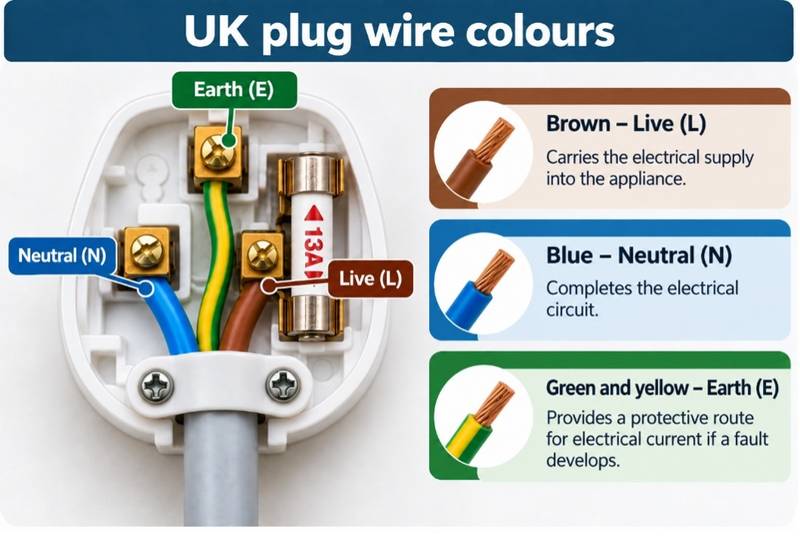
Modern UK appliance cables use three standard wire colours:

  • Brown is live (L)
  • Blue is neutral (N)
  • Green and yellow is earth (E)


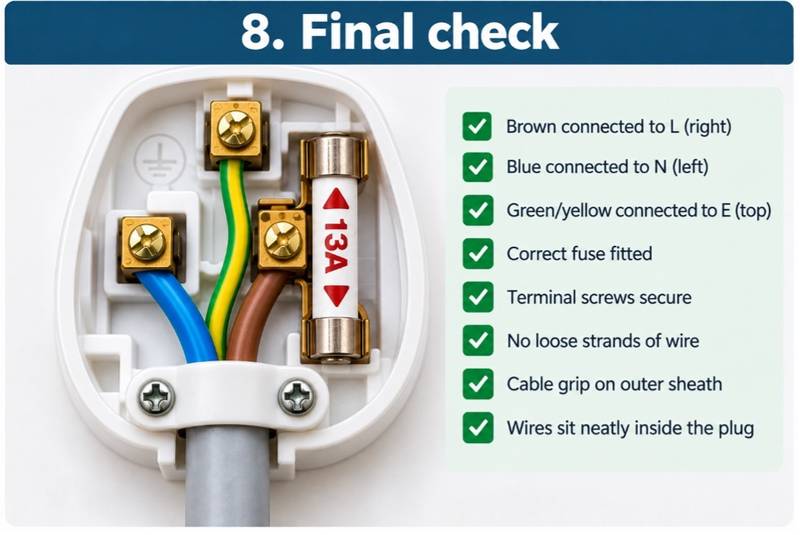
Inside a standard UK plug, the live terminal is on the right when viewed with the casing removed. This connection is also positioned next to the fuse.

The neutral terminal is on the left. And the earth terminal sits at the top.

Older appliances may use different colours. Older UK wiring can use red for live, black for neutral and green for earth.

Important: If the wiring does not follow a colour scheme you recognise, do not guess. Instead call a professional.

How to Rewire a UK Plug: A Step-by-Step Guide

What Does Each Wire Do?

The live wire carries the electrical supply into the appliance. In modern cables, this wire has brown insulation.

The neutral wire completes the electrical circuit and is identified by blue insulation.

The earth wire provides a protective route for electrical current if certain faults develop. It is identified by green and yellow insulation.

Important: Some appliances are double insulated and do not require an earth connection. These appliances may therefore have a two-core cable containing only brown and blue wires.

You should never add or improvise an earth connection where one was not originally provided.

How to Rewire a UK Plug

If the cable and appliance are in good condition, fitting the replacement plug involves preparing the cable and connecting each conductor securely.

How to Rewire a UK Plug: A Step-by-Step Guide

1. Remove the Old Plug

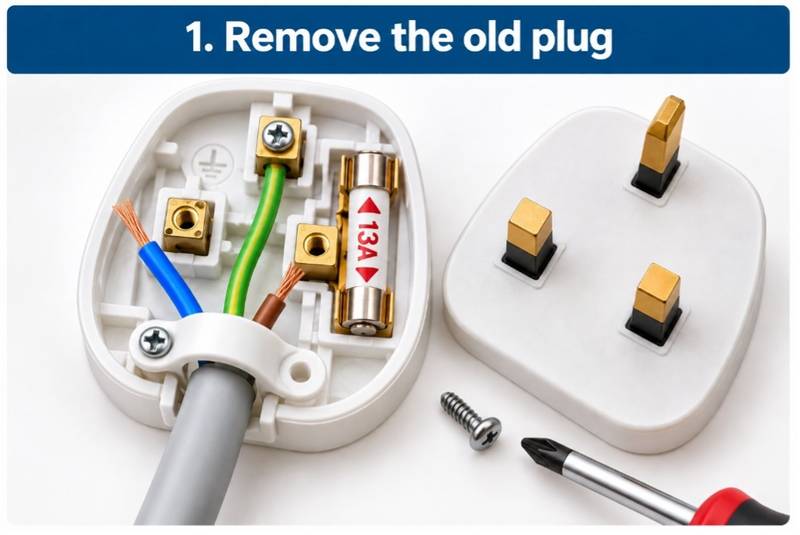
Make certain the appliance is disconnected from the electricity supply.

If you are replacing a rewirable plug, open the casing and loosen the terminal screws. You can then release the individual wires and cable grip.

If removing a damaged moulded plug, it will normally need to be cut from the cable.

Important: Before cutting off an original moulded plug, check the manufacturer's guidance. Not all moulded plugs are suitable for replacement. Changing the plug may also affect the warranty on some products.

How to Rewire a UK Plug: A Step-by-Step Guide

2. If You Need to Prepare the Cable

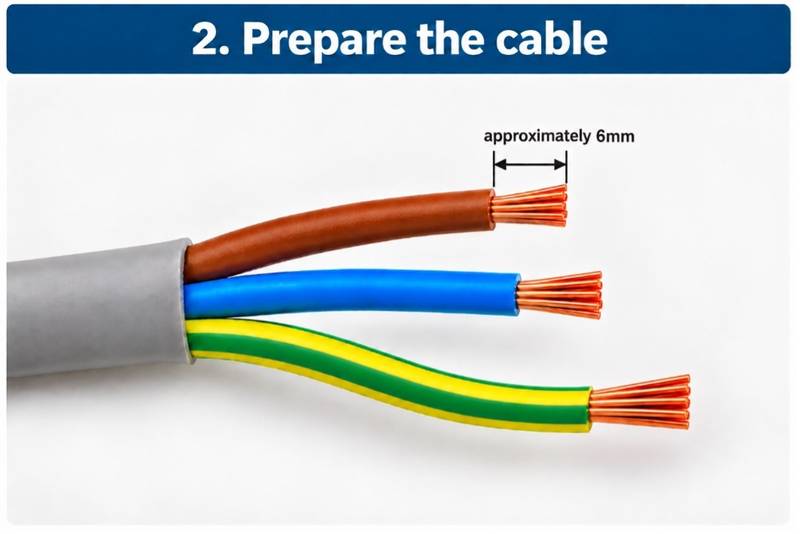
You may need to prepare the cable before connecting the new plug. The outer sheath of the appliance cable needs to be removed sufficiently to expose the individual insulated conductors.

If you’re removing the outer cable, take care not to cut or damage the insulation around the brown, blue or green/yellow wires.

Ensure each conductor is long enough to reach its terminal without strain and positioned neatly within the plug. The earth conductor should not be under tension. Avoid leaving excessive slack inside the plug.

Note: Strip only sufficient insulation for the conductor to be fully secured within the terminal, following the plug manufacturer's instructions. No unnecessary bare conductor should remain visible once the terminal screw is tightened. To avoid a short circuit, it’s important that no copper wire is sticking out above or below the terminal. Loose strands should not protrude from the terminal either.

How to Rewire a UK Plug: A Step-by-Step Guide

3. Connect the Earth Wire

Once you’re happy the wires are a good length, you can feed the wires into the new plug terminals.

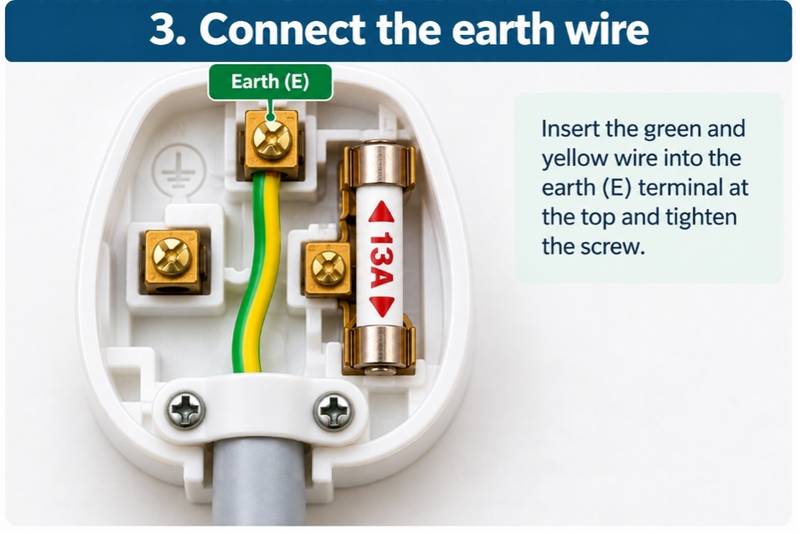
Start by connecting the green and yellow wire to the terminal marked E or carrying the earth symbol.

This is normally the upper terminal in a standard UK plug.

Make sure the conductor is fully inserted before tightening the terminal screw. There should be no loose copper strands around the connection.

Make sure the wire’s insulation is not in the way of the screw. Don’t overtighten the screws.

Note: If the appliance only has a two-core cable, there will be no earth conductor to connect. Do not try to improvise an earth

How to Rewire a UK Plug: A Step-by-Step Guide

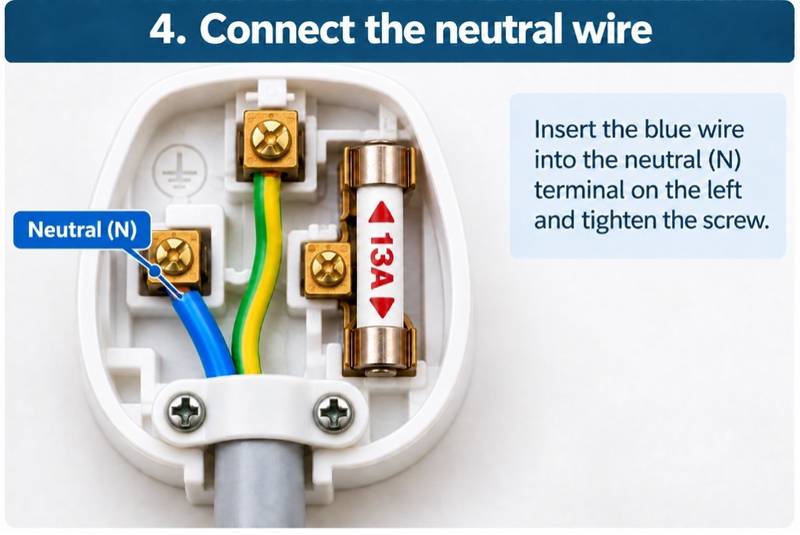
4. Connect the Neutral Wire

Connect the blue wire to the terminal marked N.

This is normally positioned on the left-hand side of the plug.

Again, the copper conductor should sit securely inside the terminal with no strands outside. Tighten the screw firmly without damaging the conductor.

How to Rewire a UK Plug: A Step-by-Step Guide
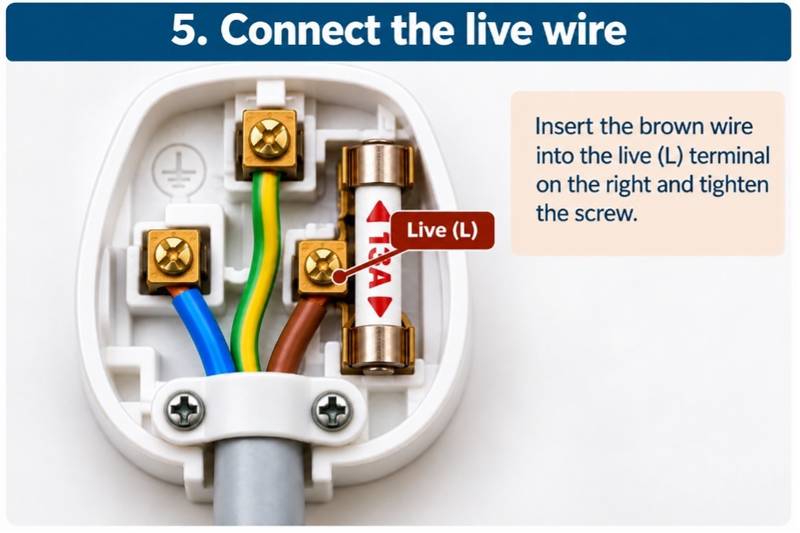
5. Connect the Live Wire

The brown wire connects to the terminal marked L.

This terminal is positioned beside the plug fuse. Electricity therefore passes through the fuse before reaching the appliance through the live conductor.

Check that the conductor is securely held and that no loose strands are visible.

How to Rewire a UK Plug: A Step-by-Step Guide

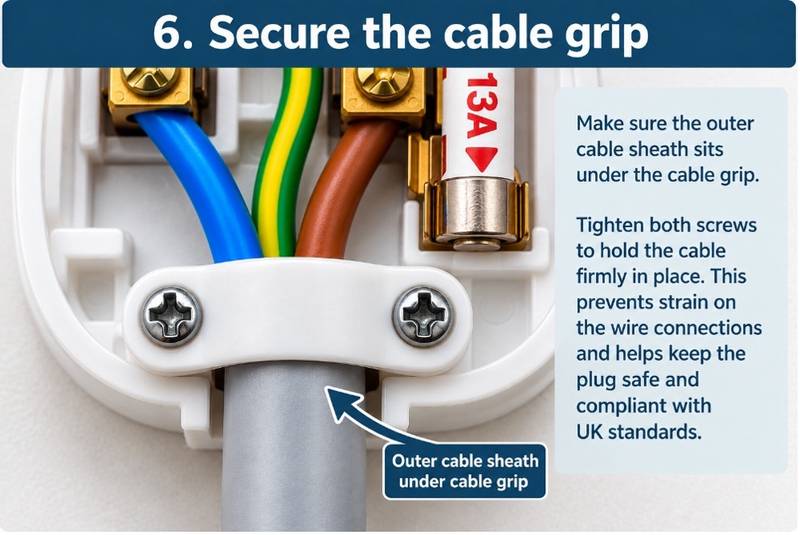
6. Secure the Cable Grip

A correctly wired plug does not rely on the electrical terminals to hold the cable in position. This is unsafe.

The cable grip provides this mechanical support.

Position the cable so the grip clamps onto its outer sheath. It should not clamp directly onto the individual brown, blue or green/yellow wires.

Note: Tighten the cable grip sufficiently to prevent the cable moving or pulling free. This is an important check. If the outer sheath stops before reaching the grip, the internal conductors can be placed under unnecessary strain.

How to Rewire a UK Plug: A Step-by-Step Guide

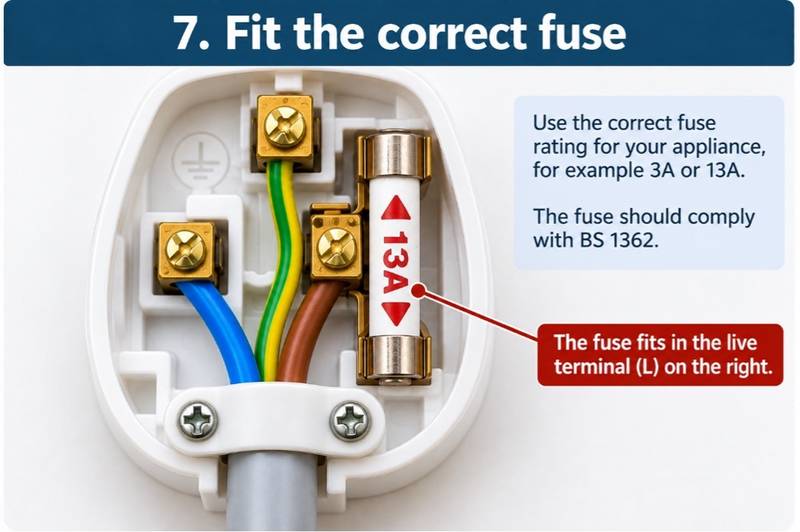
7. Check the Fuse

UK plugs contain a cartridge fuse that protects the appliance cable against excessive current.

Sometimes a fuse reaches its lifespan and stops working. The correct fuse depends on the appliance and its manufacturer's requirements. If you’re replacing an existing fuse, use the same rating unless the manufacturer's instructions specify otherwise. Never fit a higher-rated fuse purely to stop a fuse from blowing.

Common modern plug fuse ratings are 3A and 13A, although 5A fuses can still be found in some older equipment.

The fuse itself should comply with BS 1362.

How to Rewire a UK Plug: A Step-by-Step Guide

8. Check Your Connections

Before replacing the plug cover, inspect the wiring carefully.

Check that:

  • brown connects to L
  • blue connects to N
  • green/yellow connects to E, where required
  • terminal screws are secure
  • no loose copper strands are visible
  • very little bare conductor is exposed
  • the cable grip holds the outer sheath
  • the correct fuse is securely fitted

Also check that the individual wires sit neatly inside the plug without being trapped by the casing.

Once everything is secure, replace the plug cover and tighten its retaining screw.

How to Rewire a UK Plug: A Step-by-Step Guide

What Are the Most Common Plug-Wiring Mistakes?

Putting each wire into the correct terminal is only part of wiring a plug safely.

One common problem is removing too much insulation. This can leave exposed copper outside the terminal.

Another is leaving individual copper strands loose. A stray strand can potentially contact another terminal or component.

The cable grip can also be fitted incorrectly. It should hold the outer cable sheath rather than the individual insulated conductors.

Terminal screws also need to be secure. Loose electrical connections can generate heat during use.

Finally, fitting an inappropriate fuse removes an important element of the plug's protection.

How Can You Tell If a Plug Is Damaged?

Rewiring is not always the right response to a plug problem.

Replace a damaged plug rather than continuing to use it. Warning signs can include cracks, damaged pins, loose components, scorching, melted plastic or other signs of overheating.

You should also stop using an appliance if its plug becomes unusually hot or produces buzzing or crackling sounds.

Repeatedly blown fuses or tripped circuit breakers can indicate a fault elsewhere. Fitting another fuse each time does not address the cause.

Should You Rewire a Burnt Plug?

A burnt or melted plug needs more investigation.

Heat damage could result from a loose connection within the plug. However, the socket, appliance or cable could also have a problem.

Look for discolouration, melting or scorching around both the plug and socket.

If either shows signs of overheating, stop using the appliance immediately and have the equipment inspected by a qualified electrician before further use.

Can You Rewire a Moulded Plug?

Many modern appliances come with moulded plugs that are permanently attached to the cable.

These plugs are not designed to be opened and rewired. If one needs replacing, the existing plug normally has to be removed and a suitable rewirable plug fitted.

However, replacing a factory-fitted plug is not always appropriate.

For appliances purchased outside the UK, check the manufacturer's guidance and ensure the appliance is suitable for use on the UK electricity supply before using an adaptor or replacement plug.

You should also check whether replacing a moulded plug could affect the manufacturer's warranty.

Note: A replacement UK 13A plug should comply with BS 1363. The plug should normally have the relevant standard marked on its casing. The fuse should meet BS 1362.

When Should You Call an Electrician?

Changing a standard plug can be straightforward.

However, there are situations where further electrical investigation should be followed.

Get professional advice if a plug or appliance overheats, if there are damaged cables or a fuse fails more than once. The same applies if sockets are damaged or circuit breakers regularly trip.

Important: You should not rewire a plug when you cannot confidently identify the conductors or understand the appliance's requirements. A new plug cannot correct an electrical fault elsewhere in an appliance or circuit. If in doubt, call a professional. Always follow the appliance manufacturer's guidance where it differs from this article. If the plug, cable, appliance or socket shows signs of damage, overheating or burning, do not continue using the equipment until it has been inspected by a suitably qualified professional

Rewiring a UK Plug Safely

Correct wire connections are only part of the job.

The terminals need secure connections, the outer cable sheath must sit under the cable grip and the correct fuse must be fitted. There should also be no loose strands or unnecessarily exposed copper.

If the plug, cable or appliance shows signs of electrical damage, don’t use the appliance and call an electrician or qualified repair professional to identify the cause. Replacing the plug alone may not be enough and an undiagnosed fault can be risky.

Able Group offers 24/7 electrician help. Call us on 0330 108 4111 in an emergency or if you need any non-emergency electrical work.

Related Articles

Call us
Request A Callback
Complete the form below to request or schedule a callback.

By submitting this form you consent to your data being collected and stored. Please refer to our Privacy Policy for further information.