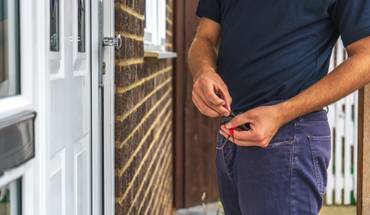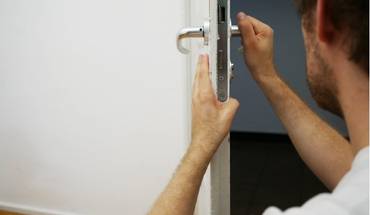
It’s always worth reviewing your home security every so often and updating your current measures to make sure they are up to date and working their best.
Remember, every little deterrent helps. If an opportunist burglar thinks the next home is an easier target they’ll move on.
What Are Common Ways a Door is Vulnerable to Burglars?
- Lock snapping
- Outdated or badly fitted locks
- Only having a single locking mechanism. Simple latches offer little protection
- Soft wooden frames can crack under force
- Repeated pressure around the lock causes splitting
- Older timber is more likely to give way
- Basic hinges are another weak spot
- Exposed hinges may be unscrewed, allowing the door to be lifted out
- Glazed panels near the handle can be targeted
- Poor strike plates weaken the lock area
- Not closing the door properly
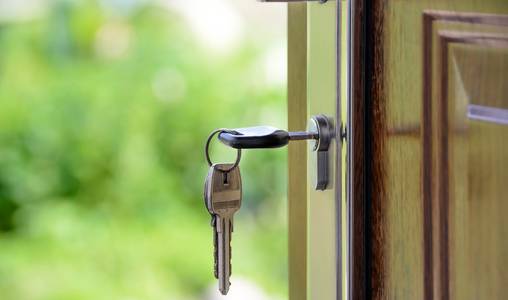
- Door keys within easy reach of a letterbox
Apart from not shutting the door properly or leaving keys within reach, the above are also easy to remedy with the help of a professional locksmith.
What is Lock Snapping?
Lock snapping is a common method used by burglars to break into homes, usually targeting standard euro-cylinder locks. Euro-cylinders are typically found on uPVC, composite, and aluminium exterior doors, such as front and back doors. You’ll recognise a euro-cylinder as a single cylinder that locks the door from both the inside and the outside.
Statistics vary, but some suggest lock snapping could be as high as 1 in 3 of all burglaries.
Lock snapping exploits the weakness in the design of standard euro cylinder locks, allowing intruders to gain entry in seconds and with minimal noise.
Using a few basic tools like a hammer and a pair of pliers, a burglar exposes the cylinder and applies force to snap the cylinder in half at its weakest point - usually where the fixing screw holds the lock in place.
Anti-snap locks are engineered to resist this method of attack. They incorporate features such as a sacrificial front section (which breaks off harmlessly), a hardened steel core, anti-drill and anti-pick pins, and a design that prevents the plug from being removed easily.
But how do you know if you have an anti-snap lock?
Check your cylinder lock and see if it’s stamped with a mark, which shows it offers anti-snapping protection. Look for:
- A three-star British Kitemark stamp
- A SS312 Sold Secure Diamond Stamp
- TS007 3 Star Rated
If your door uses an older cylinder, especially on the front or back door, if you live in a higher-crime area, if your insurance asks for better hardware, or if you’ve recently moved in and want to be safe, consider replacing your lock to get the best protection against snapping.
Do You Need a 3-Star Euro Cylinder Lock?
Even if your door has a multi-locking mechanism the locking points are still operated by the cylinder. Unfortunately, this is often the weakest part of the lock. So, it pays to get the best cylinder you can. Locks such as Brisant Ultion and Avocet ABS Ultimate are considered some of the best.
It sounds obvious but make sure it is fitted properly. Even the best cylinder is only effective if the door, frame and fixings are sound. The length of the cylinder should match your door thickness and ensure no big overhang, which could expose the protrusion to attack.
You also might not be insured if it’s fitted by a non-professional.
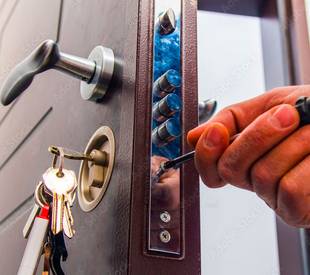
Fast, Local, Trusted Locksmiths
24/7 professional locksmith services for homes and businesses
Get In Touch TodayHow to Tell If Your Locks Meet Insurance Standards
Many home insurance policies in the UK include requirements around locks. If you fail to meet them, you risk a claim being denied after a break-in.
Common UK Lock Standards:
Depending on the locking mechanism, look for the following on your hardware:
- BS3621 is the most recognised British Standard for door locks. It requires resistance to drilling, picking, and forced attack. Most insurers ask for BS3621 on external doors.
- BS8621 is similar to BS3621 but allows keyless escape inside.
- BS10621 is used for doors with a thumbturn inside.
- TS007 applies to euro cylinder locks and door handles. This standard features a one or three-star rating. Three-star cylinders offer the highest level of protection, whereas one-star cylinders aren’t protected against lock snapping. But a three-star rating can be achieved by combining items. For example, a one-star cylinder and two-star handle.
- Sold Secure is another recognised UK security standard. It grades locks as Bronze, Silver, Gold or Diamond. Diamond is the most secure.
- A Kitemark shows a lock meets British testing standards.
Here’s how to check your current locks:
- Look at each external door (ground-floor front, back, side) and examine the lock hardware
- Check for stamps or markings on the faceplate or cylinder: for example, BS 3621 or BSI Kitemark. If your locks have standards that you’re unsure about, you can check online. Or call a local locksmith to review your door security in general.
- Review your insurance wording: see if they specify BS 3621 standard locks on all external doors or approved cylinder locks.
- Check the condition: old, worn locks may no longer meet what was originally required
If your locks don’t comply:
- Get a quote for an upgrade from a qualified locksmith.
- Notify your insurer of the work or confirm the upgrade meets their criteria.
- Keep records of the upgrade (invoice, specification), so you’re covered in future claims.
BS 3621 Locks and Why They Matter
The British Standard BS 3621 – ‘Thief-resistant locks for hinged doors’ - is one of the most respected standards for domestic door locks. You’ll find it typically on wooden and composite doors with 5-lever mortice locks. Some euro cylinders bear the standard too.
For homeowners, many insurers require BS3621 or equivalent locks on all ground-floor external doors. Failure to comply risks invalidating the policy.
How to check if your locks meet BS3621:
Look at the faceplate on a mortice lock or the cylinder area and check for a BS 3621 or a Kitemark stamp. If your lock is very old, it might pre-date the current standard, or the fit may have been compromised over time.
If you have a multi-point uPVC door, it may not be labelled BS3621, but insurers often accept an equivalent standard. So, ask a locksmith to confirm the spec.
How to Make Your Front Door More Secure Without Replacing It
Locks are just part of it. Other front door upgrades can often be smart, cost-effective and can transform your security if you focus on the right areas. You can look at the below examples, but if you’re not sure, call a locksmith to help.
Check and upgrade the cylinder or lock - if you currently have a standard euro cylinder or other lock, switch to an anti-snap TS007 3-Star or other British Standard lock. That alone can transform your door’s strength.
Improve strike plates and fixings - many doors are weakened by the fixings. Use long screws (70-100 mm) to secure the strike plate into the door frame, not just the face. Reinforce the frame if needed.
Add or upgrade hinge bolts, security handles and escutcheons - if your door has external hinges or poor-quality handles, these are often weak points. Install hinge bolts and replace the handles with secure versions.
Ensure the frame is in good condition - a door is only as good as its frame. If the frame is damaged, rotten or weak, you should repair or reinforce it.
Seal and maintain the hardware - a lock that jams, sticks or is difficult to turn can be a security risk. Regular maintenance, such as lubrication or cleaning, helps prevent your lock getting to this stage.
Upgrading delivers better security. And if an intruder thinks the door will be a challenge they will move on.
Tip: Don’t overlook your surrounding area. Don’t keep valuables on display or keep keys near letterboxes where they are within easy reach. Use good doorway lighting and maintain a clear view from the street. These all help deter opportunistic intruders.
Final Thoughts
When it comes to better security, if you haven’t already, focus on the areas above. Upgrading to anti-snap locks, choosing a 3-Star euro cylinder. Make sure your locks meet insurance standards and are at the BS 3621 standard.
Check your front, back and any side doors. Check for markings, assess the frame condition and door fixings. If you spot anything dated, loose or unmarked, you’ve got a good candidate for the upgrades.
If you need a lock upgrade or need a locksmith in an emergency Able Group’s professionals can help. We’re here 24/7, contact a member of our friendly team today!
The Lock Repair and Maintenance Experts
We repair, replace, and install all types of locks.
Speak to Able’s Team Today